
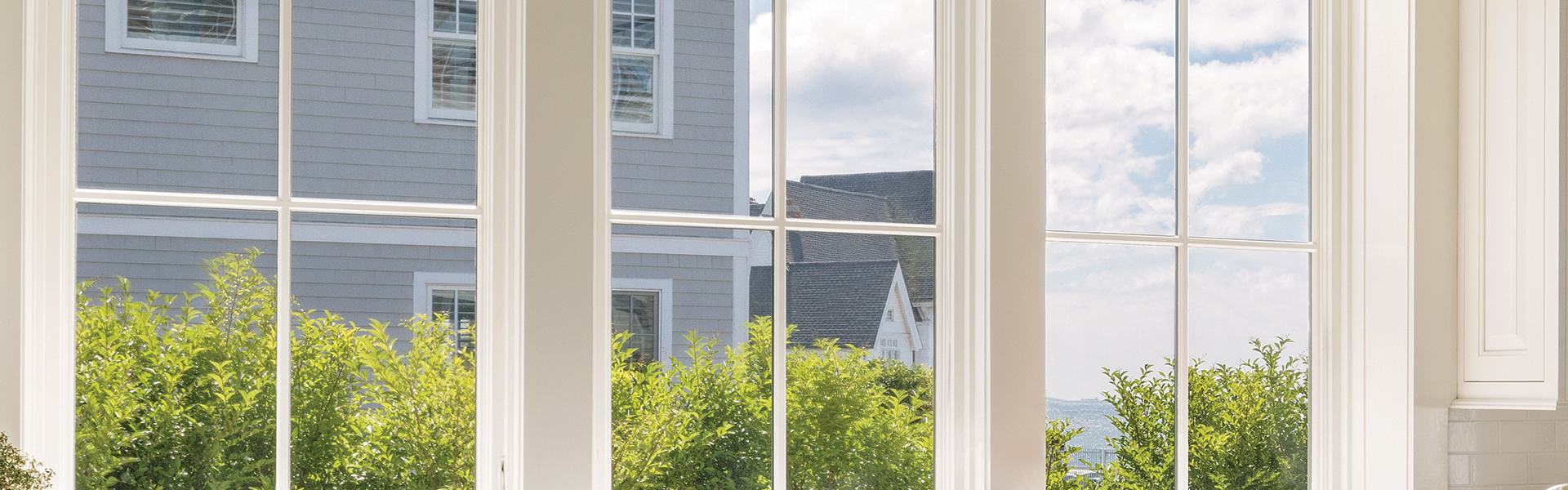

Compare Infinity® by Marvin® Window Styles
Infinity® by Marvin® offers several window styles, including double hung, casement, awning, glider, bay and bow windows. The right choice depends on where the window will be installed, how much ventilation you want, how you prefer it to operate and whether the sash has room to open.
Double hung windows offer a traditional appearance and convenient cleaning. Casement and awning windows provide strong ventilation and an unobstructed view. Glider windows work well where an outward-opening sash could interfere with a patio, walkway or landscaping. Bay and bow windows project beyond the wall to create more light, dimension and interior space.
Use this guide to compare the benefits, limitations and best applications of each Infinity® window style.
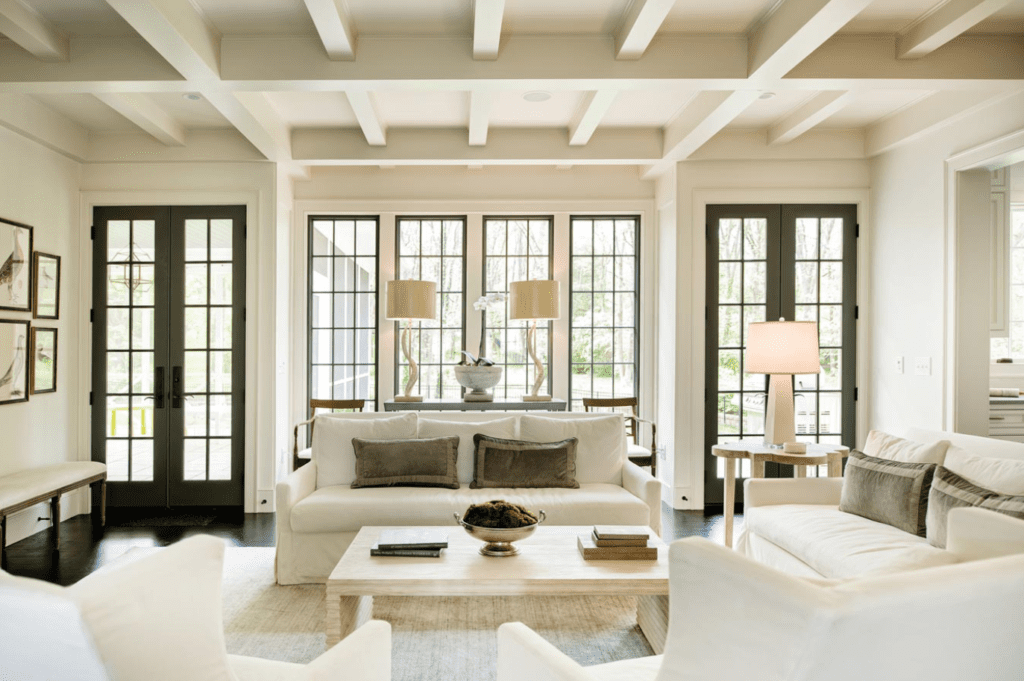
Double Hung vs. Casement vs. Glider Windows
Double hung, casement and glider windows can often fit similar openings, but they operate very differently.
Choose a double hung window when you want a traditional appearance, vertical operation and sashes that tilt inward for cleaning.
Choose a casement window when ventilation, an unobstructed view and convenient operation are priorities.
Choose a glider window when the opening is wider than it is tall or when an outward-opening window could interfere with a deck, patio, walkway or landscaping.
The best choice is not simply the most expensive style. It is the window that fits the opening, complements the home and supports how you use the room.
Infinity® Double Hung Windows
Infinity® Double Hung windows offer a familiar, traditional appearance with two vertically operating sashes. They are a practical replacement option for bedrooms, living rooms and other areas where homeowners want flexible ventilation and convenient cleaning access.
What Are Double Hung Windows Best For?
Double hung windows work well in traditional and transitional homes, particularly where an outward-opening sash would interfere with a walkway, patio or landscaping.
Because the sashes move vertically, they can provide ventilation without extending beyond the exterior wall. They are also a popular option for upper-story rooms where cleaning the exterior glass from inside the home is important.
Tilt Release Button for Easier Cleaning
Cleaning the exterior glass of an upper-story window can be difficult. The Infinity® tilt-release system allows the sash to tilt into the room, making the exterior glass easier to reach from inside the home.
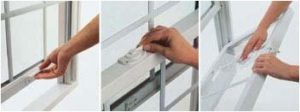
- Unlock and raise the sash slightly.
- Depress the tilt-release button and slide the lock lever over the button.
- Tilt the sash into the room for easier cleaning without removing the screen.
Potential Limitations of Double Hung Windows
A double hung window may not be the best choice when the homeowner wants the largest possible uninterrupted view. The horizontal meeting rail remains visible through the center of the opening.
Homeowners who prioritize a broader ventilation opening or a more unobstructed view may prefer a casement window.
Infinity® Casement and Awning Windows
Infinity® Casement and Awning windows combine broad ventilation, convenient operation and a relatively unobstructed view. Casement windows are hinged at the side, while awning windows are hinged at the top.
When Should You Choose a Casement Window?
Casement windows are often used in kitchens, living rooms and other areas where homeowners want expansive views and generous ventilation. Their folding handles can also make them easier to operate in locations such as above a kitchen counter.
When Should You Choose an Awning Window?
Awning windows are frequently used in bathrooms, basements and smaller wall openings. They can also be combined with fixed windows when homeowners want ventilation without dividing the primary view.
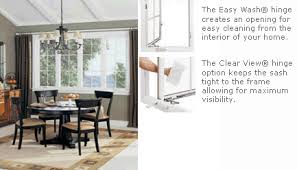
Easy Wash® and Clear View® Hinge Options
The standard Easy Wash® hinge is designed to improve access to the exterior glass from inside the home. The optional Clear View® hinge is designed to maximize the visible glass area.
Both casement and awning windows feature folding handles that sit closer to the frame when not in use, helping them interfere less with blinds and other window treatments.
Multi-Point Locking System
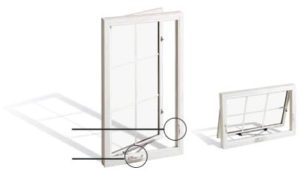
Infinity® Casement windows use a multi-point locking system. A single lock lever activates multiple locking points, helping secure the sash against the frame. The operating handle turns smoothly and folds out of the way when not in use.
Potential Limitations of Casement and Awning Windows
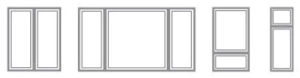
Because casement and awning windows open outward, they require adequate exterior clearance. They may not be appropriate where an open sash could extend over a busy walkway, deck or patio.
Nearby shrubs, trees and other landscaping should also be considered before selecting an outward-opening window.
Infinity® Glider Windows
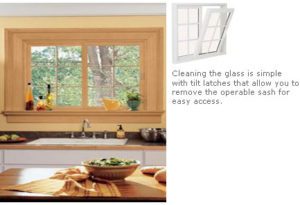
Infinity® Glider windows open horizontally rather than projecting into the interior or exterior. They are often a strong option for wide openings and areas where a swinging sash could interfere with a patio, walkway, furniture or landscaping.
When Is a Glider Window the Best Choice?
A glider window is often best when the opening is wider than it is tall or where there is not enough exterior clearance for a casement window.
The sash moves horizontally along the frame, providing familiar operation without extending into the room or outside the home.
Ultrex® Fiberglass Construction
Infinity® Glider windows are made with Ultrex® fiberglass inside and out. The material is designed for long-term durability and low-maintenance performance.
Available glass packages can also help homeowners address comfort and energy-performance priorities based on the home, window orientation and selected configuration.
What Are the Drawbacks of a Glider Window?
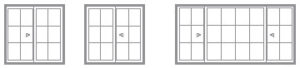
A glider does not open the entire window area at once. One sash typically moves behind the other, so only part of the opening provides ventilation.
Homeowners looking for the broadest possible ventilation opening may prefer a casement window.
Infinity® Bay Windows
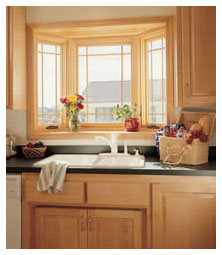
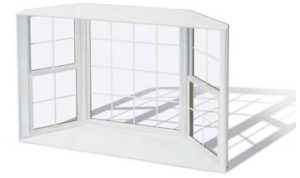
An Infinity® Bay window projects beyond the exterior wall using three connected window sections. The center unit is typically wider, while two angled side units create additional depth, light and architectural interest.
Bay windows are commonly used in living rooms, dining rooms and other spaces where homeowners want to create a focal point or make the room feel larger.
What Is the Difference Between a Bay Window and a Standard Window?
A standard window remains within the plane of the exterior wall. A bay window extends beyond it. This projection can bring natural light into the room from multiple directions and create an interior seat, shelf or display area.
Bay Window Configurations and Design Options
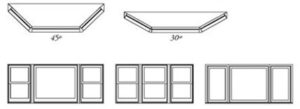
Infinity® Bay windows can be configured with double hung or casement operating units. Head and seat boards are included, and 30-degree and 45-degree configurations are available.
Bare pine head and seat boards can be stained or painted to coordinate with the home’s interior.
What Should Homeowners Consider Before Choosing a Bay Window?
A bay window is more complex than replacing a standard flat window. Structural support, exterior weather protection, interior finishing, furniture placement and nearby heating or cooling vents may all affect the final design.
Because a bay window combines multiple window units and projects beyond the wall, it generally requires a larger investment than a conventional flat replacement window.
Infinity® Bow Windows
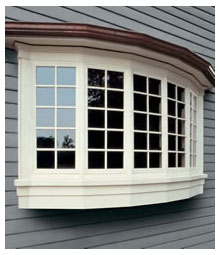
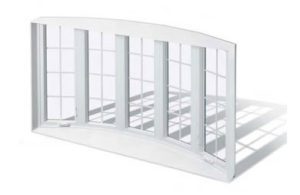
An Infinity® Bow window creates a gentle curved projection using four, five or six connected casement window units. Compared with the sharper angles of a bay window, a bow window produces a softer architectural shape and a broader panoramic view.
What Is the Difference Between Bay and Bow Windows?
A bay window generally uses three window units and creates more pronounced angles. A bow window uses four or more units to create a gradual curve.
Bay windows often create a deeper interior projection, while bow windows emphasize width, glass area and expansive views.
When Is a Bow Window a Good Choice?
Bow windows are often selected for wide exterior walls, large living areas and rooms where homeowners want to introduce more glass and architectural character.
They can work particularly well when a softer, curved projection complements the design of the home better than the sharper angles of a bay window.
Head and seat boards are included in bare pine so they can be stained or painted to coordinate with the interior.
Potential Limitations of Bow Windows
Bow windows require sufficient wall width and careful installation. Because they combine several window units, they are typically more complex than a conventional flat replacement window.
The exterior projection, structural conditions and required interior finishing should all be evaluated before the final configuration is selected.
Can You Combine Different Window Styles in One Home?
Yes. Most homes use more than one window style. A homeowner might choose casement windows in the kitchen, double hung windows in bedrooms, glider windows near a patio and a bay or bow window in the primary living area.
The windows do not need to operate identically to look coordinated. Consistent frame finishes, grille patterns, glass selections and hardware can help different window styles feel like part of one unified design.
Does Window Style Affect Energy Efficiency?
Window style can influence how a window operates, ventilates and seals, but style is only one part of overall performance.
Glass selection, frame material, window size, installation quality and the condition of the existing opening also matter. Homeowners should choose a style that fits both the opening and the way they expect to use the room.
How Much Do Different Window Styles Cost?
Window style affects the overall project investment. Standard double hung, casement, awning and glider windows are generally less complex than projecting bay and bow window assemblies.
Size, glass selections, finishes, grille patterns, opening conditions and installation requirements can also affect the final proposal.
Bay and bow windows generally cost more because they combine multiple window units and may require additional structural, exterior and interior finishing work.
Gravina’s Window Center of Littleton® provides a written proposal based on the actual openings, selected products and installation requirements. Generic per-window pricing may not account for the conditions that affect the completed project.
Why Window Installation Matters for Every Style
The window style determines how the product looks and operates. The installation determines how successfully it fits and performs in the home.
Double hung and glider windows must be installed square and level so the sashes operate correctly. Casement and awning windows require proper alignment for smooth operation and locking. Bay and bow windows require careful structural support, weather management and interior finishing.
Gravina’s Window Center of Littleton® uses in-house installation crews for window and door projects and backs its installation workmanship with a lifetime workmanship warranty.
Frequently Asked Questions About Window Styles
What Is the Most Popular Replacement Window Style?
Double hung windows remain a popular choice because their appearance works with many home styles and their sashes can provide flexible ventilation. However, the best style depends on the opening, room layout, exterior clearance and homeowner priorities.
Which Window Style Provides the Most Ventilation?
Casement windows can provide broad ventilation because the sash opens outward from the side. The open sash may also help direct outside air into the room, depending on wind direction and window placement.
Which Window Style Is Easiest to Clean?
Double hung windows with tilt-in sashes are often convenient to clean from inside the home. Casement windows equipped with hinges designed to improve access to the exterior glass may also provide easier cleaning than some conventional window styles.
What Window Style Is Best Above a Kitchen Sink?
A casement window is often a strong choice above a kitchen sink because its operating handle can be easier to reach than the sash of a vertically operating window. The final choice should also account for exterior clearance and the size of the opening.
What Type of Window Works Best Next to a Patio or Walkway?
A double hung or glider window may work better next to a busy patio or walkway because the sash does not project outward. An open casement or awning window could interfere with people walking close to the home.
Are Casement Windows Better Than Double Hung Windows?
Neither style is universally better. Casement windows generally provide a broader opening and a less obstructed view. Double hung windows offer a traditional appearance, vertical operation and convenient tilt-in cleaning. The better option depends on the room and opening.
What Is the Difference Between a Glider and a Double Hung Window?
A glider window opens horizontally, while a double hung window opens vertically. Gliders are often used in wide openings. Double hung windows are frequently selected for taller openings and more traditional architectural designs.
Do Bay and Bow Windows Require Structural Changes?
Some bay and bow window projects may require additional framing, support, weather protection or interior finishing. The existing opening and the size of the new window assembly should be evaluated before the final project scope is determined.
Can Fixed and Operating Windows Be Combined?
Yes. Fixed windows can be combined with casement, awning, double hung or other operating styles. This allows homeowners to create a larger view while still providing ventilation where it is needed.
Can I Use Different Window Styles Throughout My Home?
Yes. Using different window styles can help each room function properly. Coordinating the frame finish, grille design, glass and hardware can create a consistent appearance throughout the home.
See Infinity® Window Styles in Our Littleton Showroom
Product photographs can help narrow the choices, but they do not fully show how a sash operates, how the hardware feels or how frame and glass options look at full scale.
Visit the Gravina’s Window Center of Littleton® showroom to compare Infinity® by Marvin® window styles and speak with a team that has served Colorado homeowners since 1973.
We can help you evaluate the opening, room layout, ventilation needs, exterior clearance and architectural style before recommending a window.
Ready to Find the Right Window for Your Home?
The right window should fit the opening, complement your home and operate properly for the way you use the room. Gravina’s Window Center of Littleton® can help you compare Infinity® by Marvin® double hung, casement, awning, glider, bay and bow windows.
Call (303) 794-0490 to speak with a window specialist or schedule an in-home consultation.