
Choosing the right window glass options for your Colorado home involves more than selecting a frame material, color, or operating style. The glass package can directly affect indoor comfort, solar heat gain, natural light, privacy, sound reduction, and protection from fading.
That matters in Colorado, where windows must perform through intense sunlight, cold winter nights, rapid temperature changes, and significant differences in elevation.
Infinity® by Marvin® offers several window glass options designed for different performance, privacy, safety, sound-control, and decorative needs. The best choice may not be the same for every window in your home. A west-facing family room, a shaded bedroom, and a bathroom window may each benefit from a different glass configuration.
This guide explains the available options, the differences between them, and what Colorado homeowners should consider before choosing a window glass package.
Why Window Glass Selection Matters in Colorado
Glass makes up most of the visible surface area of a window. Its performance can influence indoor comfort throughout the year, especially in rooms with large windows or significant exposure to the sun.
The right glass package may help address concerns such as:
- Rooms that become excessively warm during the afternoon
- Cold areas near windows during the winter
- Glare on televisions and computer screens
- Fading of flooring, furniture, artwork, and fabrics
- Privacy in bathrooms, bedrooms, or entry areas
- Exterior noise from traffic, aircraft, schools, or nearby activity
- Safety requirements for glass near doors, floors, stairs, or wet areas
- Performance considerations for homes at higher elevations
No single glass package is automatically best for every Colorado home. The direction a window faces, the amount of shade it receives, the room’s use, the home’s elevation, and the homeowner’s priorities should all be considered.
What Should You Look for When Comparing Window Glass?
Window glass is often described with technical measurements and product names that can be difficult to understand. You do not need to become a glass engineer, but knowing a few basic terms can help you compare your options more confidently.
U-Factor
U-factor measures how readily heat passes through a complete window or door assembly. A lower U-factor generally indicates better resistance to heat loss.
This measurement is especially important during Colorado winters, but it should not be evaluated by itself. The frame, glass package, spacer system, window size, operating style, and installation all contribute to the finished window’s performance.
Solar Heat Gain Coefficient
Solar heat gain coefficient, commonly abbreviated as SHGC, measures how much solar heat passes through a window. A lower SHGC means the glass rejects more heat from the sun.
Lower solar heat gain can be helpful in west- and south-facing rooms that overheat. However, reducing solar gain can also reduce some of the passive warmth a window might otherwise provide during colder months.
This is one reason the lowest available SHGC is not automatically the correct choice for every opening.
Visible Transmittance
Visible transmittance measures how much visible light passes through a window. Higher numbers generally indicate that more natural light enters the room.
High-performance coatings can slightly change the appearance, reflectivity, or brightness of the glass. Homeowners who are sensitive to changes in color or visible light should compare actual samples before making a final decision.
Low-E Coatings
Low-E stands for low emissivity. A Low-E coating is an extremely thin layer applied to glass to help control the movement of radiant heat.
Depending on the coating and configuration, Low-E glass can help reflect exterior solar heat, retain interior warmth, reduce ultraviolet transmission, and improve year-round comfort.
Insulating Glass and Argon Gas
Modern replacement windows commonly use insulating glass units made from two or more panes separated by a sealed airspace. That space may contain argon gas to improve thermal performance.
The number of panes alone does not determine whether a window will perform well. Glass coatings, gas fill, spacer design, frame construction, window operation, and installation quality all matter.
UV and Fade Protection
Sunlight can gradually fade flooring, rugs, furniture, artwork, and window treatments. Low-E glass can reduce the amount of ultraviolet energy entering a home, but no residential glass can guarantee that fading will be completely eliminated.
Heat, visible light, material quality, distance from the window, and duration of exposure can also contribute to fading.
Which Window Glass Is Best for Your Colorado Home?
The right glass package depends on what you are trying to improve. Rather than choosing one specification for the entire home by default, consider the conditions affecting each room.
Best Glass for West- and South-Facing Windows
West-facing windows often receive strong afternoon sunlight when outdoor temperatures are already at their highest. Large south- and southwest-facing openings can also contribute to heat gain and glare.
A stronger solar-control coating, such as LoĒ³-366®, may be appropriate when:
- A room becomes uncomfortable during sunny afternoons
- The windows receive extended direct sunlight
- Reducing solar heat gain is a high priority
- Floors, furniture, or fabrics receive substantial sun exposure
- Glare interferes with televisions or computer screens
The tradeoff is that stronger solar-control glass may transmit less visible light and allow less passive solar warmth during winter.
Best Glass for Cold Rooms and Winter Comfort
A room can feel uncomfortable during winter even when the thermostat says the indoor temperature is adequate. Cold glass surfaces can contribute to radiant discomfort when someone is sitting or standing near a window.
A glass configuration that includes a room-side LoĒ-i89™ coating may improve insulating performance and help the interior glass surface remain warmer. The complete window rating and installation still matter, and condensation cannot be evaluated based on the glass coating alone.
Best Glass for High-Altitude Homes
Elevation matters because sealed insulating glass units can be affected by pressure differences between the manufacturing location and the final installation location.
Homes in foothill and mountain communities may require altitude-specific glass preparation or other manufacturing considerations. The correct approach depends on the product, glass configuration, manufacturing elevation, and elevation of the home.
Homeowners in higher-elevation communities should make sure their window company accounts for the project’s actual installation elevation when ordering the windows.
Best Glass for Reducing Interior Fading
Low-E coatings can substantially reduce ultraviolet transmission and help slow the fading of interior materials. LoĒ³-366® provides stronger UV control than many standard glass configurations.
However, no window glass can completely prevent fading. Valuable artwork, specialty flooring, photographs, and sensitive fabrics may still require shades, window treatments, or other protective measures.
Best Glass for Bathrooms and Privacy
Obscure or decorative glass can provide privacy while continuing to admit natural light. These options are commonly considered for:
- Bathrooms
- Entry sidelites
- Bedrooms facing nearby properties
- Windows overlooking walkways
- Areas where the exterior view is unattractive
Privacy glass limits visibility, but the level of privacy can vary based on the pattern, lighting conditions, and distance from the glass.
Best Glass for Traffic and Exterior Noise
Specialty STC/OITC glass can help reduce the amount of exterior sound transmitted through a window. It may be worth considering for homes near highways, busy streets, airports, schools, commercial areas, or other persistent noise sources.
Sound-control glass can reduce noise, but it cannot make a room completely soundproof. Exterior walls, doors, vents, roof assemblies, and installation gaps can also transmit sound.
Energy-Efficient Glass Options
LoĒ²-272® Glass
LoĒ²-272® is a Low-E glass option designed to provide balanced year-round performance. It helps reject exterior heat during warmer weather while reducing heat loss from the home during colder months.
LoĒ²-272® may be a good fit when:
- The window receives moderate rather than extreme sun exposure
- Balanced summer and winter performance is the priority
- The homeowner wants strong energy performance without the most aggressive solar-control coating
- Maintaining natural light and a relatively neutral view is important
LoĒ²-272® also reduces ultraviolet transmission, which can help slow fading and sun-related damage to flooring, furniture, rugs, and fabrics.
Its potential limitation is that it allows more solar heat gain than LoĒ³-366®. A room with large west-facing windows or severe afternoon overheating may benefit from stronger solar control.
LoĒ³-366® Glass
LoĒ³-366® is a high-performance Low-E glass option designed to provide stronger control of solar heat gain. It can be especially useful for openings that receive intense sun exposure.
LoĒ³-366® may be appropriate when:
- A room regularly overheats in direct sunlight
- The windows face west, southwest, or south with limited shade
- Reducing air-conditioning demand is an important goal
- UV protection for interior materials is a priority
- The homeowner wants greater solar control than LoĒ²-272® provides
The stronger coating also creates tradeoffs. LoĒ³-366® may allow less visible light into the room and can have a slightly different appearance than clear glass or moderate solar-control glass. It also reduces passive solar heat that could otherwise enter during winter.
For that reason, LoĒ³-366® should be selected based on the conditions affecting the individual room rather than assumed to be the best choice for every window.
LoĒ³-366® With LoĒ-i89™
LoĒ³-366® can be combined with LoĒ-i89™, an additional coating placed on the room-side surface of the insulating glass unit.
The LoĒ³-366® coating helps control solar heat entering from outside, while the LoĒ-i89™ coating reflects radiant heat toward the interior. This combination can improve winter insulating performance and help increase comfort near the window.
A LoĒ-i89™ configuration may be worth considering when:
- Winter comfort is a major concern
- The homeowner wants improved insulating performance from a dual-pane configuration
- The room has large areas of glass
- People frequently sit or work near the window
- The opening also requires strong solar control
Because LoĒ-i89™ is exposed on the room-side surface, it should be cleaned according to the manufacturer’s care instructions. Abrasive cleaners, razor blades, metal scrapers, or other materials that could damage a coated surface should not be used.
Glass configuration and availability can vary by Infinity® product, window style, size, and project requirements.
LoĒ²-272® vs. LoĒ³-366® Glass
The primary difference between LoĒ²-272® and LoĒ³-366® is the amount of solar heat they are designed to control.
LoĒ²-272® offers balanced solar control and thermal performance. LoĒ³-366® provides stronger protection against solar heat gain and ultraviolet transmission.
When LoĒ²-272® May Be the Better Choice
LoĒ²-272® may make more sense when a window receives moderate sun, a room does not have an overheating problem, or maintaining higher visible-light transmission is important.
It may also be considered for shaded openings or orientations where aggressive solar control provides little practical benefit.
When LoĒ³-366® May Be the Better Choice
LoĒ³-366® may be the better choice for large, sun-exposed windows that contribute to excessive heat, glare, or fading. It is often considered for west- and southwest-facing rooms where afternoon conditions are difficult to control.
Does Darker Low-E Glass Change the View?
Low-E coatings can subtly affect visible light, reflectivity, and exterior color. A stronger coating does not necessarily make a room feel dark, but homeowners may notice a difference when comparing glass packages side by side.
The size and number of windows, wall colors, exterior shade, landscaping, overhangs, and room orientation can all affect how bright a finished room feels.
Whenever appearance is a priority, review physical glass samples rather than relying solely on photographs or online descriptions.
Tempered Safety Glass
Tempered glass is heat-treated to increase its strength and change how it breaks. When broken, it is designed to fracture into relatively small pieces rather than large, sharp shards.
Tempered safety glass may be required in certain locations, including some windows located:
- Near doors
- Close to the floor
- Near stairs or landings
- Inside or near tubs and showers
- In other locations defined as hazardous by applicable building codes
The need for tempered glass is determined by the window’s dimensions, location, surrounding conditions, and applicable code requirements. It should not be treated simply as an optional upgrade for every opening.
Tempered glass is more resistant to breakage than standard annealed glass, but it is not unbreakable and should not be confused with security or impact-resistant glazing.
Obscure and Privacy Glass
Obscure glass distorts the view through a window while allowing natural light to enter. It can provide an attractive alternative to permanently covering a window with blinds or shades.
It is commonly used in bathrooms, entry areas, stairways, bedrooms, and windows facing close neighboring properties.
The amount of privacy depends on the glass pattern and lighting conditions. When the interior is brighter than the exterior, particularly at night, some shapes or movement may still be visible through certain decorative patterns.
Homeowners should review the actual glass sample and consider both daytime and nighttime conditions before selecting a privacy option.
Sound Transmission Class and Outdoor-Indoor Transmission Class Glass
Specialty sound-control glazing can help reduce exterior noise by changing the thickness, construction, or arrangement of the glass panes.
Two ratings are commonly discussed:
- STC: Sound Transmission Class is commonly used to describe resistance to sounds such as speech and other mid- to high-frequency noise.
- OITC: Outdoor-Indoor Transmission Class places greater emphasis on lower-frequency exterior sounds such as road traffic and aircraft.
A higher rating generally indicates better sound reduction, but ratings should be used to compare complete window configurations rather than the glass alone.
Sound-reducing glass may be helpful for homes near:
- Highways and arterial roads
- Airports or flight paths
- Schools and athletic fields
- Commercial or entertainment districts
- Frequent neighborhood construction
- Other persistent exterior noise sources
It is important to set realistic expectations. Windows are only one part of the building envelope. Sound may continue to enter through exterior walls, roofs, doors, vents, chimneys, and installation gaps.
A sound-control glass package can reduce unwanted noise, but it cannot make a home completely soundproof.
Decorative Glass Options
Decorative glass combines natural light, privacy, and architectural character. It can be used to complement traditional, transitional, or contemporary homes while limiting a direct view through the window.
Decorative glass is commonly considered for bathrooms, entryways, sidelites, stairways, and other spaces where standard clear glass may not provide enough privacy.
Available patterns can vary by Infinity® product and configuration. Existing decorative options may include Frost, Glue Chip, Rain, Narrow Reed, Reed, and Obscure glass.



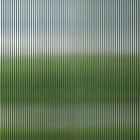
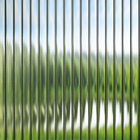

Online images can help narrow your choices, but glass patterns may look different depending on light, distance, room placement, and the size of the window. Viewing physical samples is the best way to compare texture, visibility, and privacy.
Should Every Window in Your Home Use the Same Glass?
Not necessarily. Different rooms often have different performance needs.
For example:
- A west-facing family room may need stronger solar control.
- A shaded north-facing bedroom may benefit from a more balanced glass package.
- A bathroom may need obscure or decorative glass.
- A bedroom facing a busy street may benefit from sound-control glazing.
- A window near a bathtub, door, or stairway may require tempered safety glass.
- A mountain home may require altitude-specific preparation.
Using different glass packages within the same project can make sense when the selections are based on the actual conditions affecting each opening.
However, differences in coating, reflectivity, or visible color may be noticeable when dissimilar glass packages are installed directly beside one another. Appearance should be considered when making room-by-room selections.
Can Better Window Glass Prevent Condensation?
High-performance glass can help increase the temperature of the interior glass surface, which may reduce the likelihood of interior condensation under certain conditions. It cannot guarantee that condensation will never occur.
Interior condensation is influenced by several factors, including:
- Indoor relative humidity
- Outdoor temperature
- Indoor temperature
- Air circulation around the window
- Window coverings
- The glass and window configuration
- The amount of moisture being generated inside the home
Condensation does not automatically mean a window has failed. During very cold weather, excessive indoor humidity can cause moisture to form even on a properly functioning window.
Moisture appearing between sealed panes is a different issue and may indicate that the insulating glass seal has failed.
Can New Windows Completely Eliminate Outside Noise?
No responsible window company should promise that replacement windows will completely eliminate outside noise.
Sound-control glazing, tighter window construction, and professional installation may significantly improve the indoor environment, but the result depends on the type and frequency of the noise as well as the construction of the home.
Low-frequency sounds from trucks, aircraft, bass, or heavy equipment can be especially difficult to control. Walls, attic assemblies, doors, vents, and other penetrations may continue to transmit sound after the windows are replaced.
The realistic goal is sound reduction, not complete soundproofing.
What Are the Potential Drawbacks of High-Performance Glass?
Better performance does not mean that every available upgrade is right for every homeowner. Glass selection involves balancing comfort, appearance, light, cost, and the conditions affecting the opening.
Reduced Solar Heat Gain
A strong solar-control coating can reduce summer overheating, but it also limits passive solar warmth during colder months. That tradeoff may be worthwhile on a west-facing window but less valuable on a shaded opening.
Changes in Visible Light and Appearance
Different Low-E coatings can subtly affect visible light, exterior reflectivity, or glass color. These differences may be more noticeable on large windows or when different glass packages are installed next to one another.
Higher Project Cost
Tempered, decorative, sound-control, and upgraded performance glass can increase the cost of a replacement-window project. An option should solve a meaningful problem rather than be selected only because it is described as an upgrade.
Special Cleaning Requirements
Room-side coatings such as LoĒ-i89™ require proper care. Abrasive materials, metal tools, and inappropriate cleaners can damage coated glass surfaces.
Glass Alone Cannot Correct Every Problem
Even an advanced glass package cannot compensate for a poorly constructed window, incorrect measurements, inadequate flashing, air leakage, or improper installation.
Glass Selection Is Only One Part of Window Performance
A high-performance coating is valuable, but it is only one component of a replacement window.
The finished result also depends on:
- The construction of the frame and sash
- The quality of the insulating glass unit
- The spacer and sealing systems
- The size and operating style of the window
- Accurate measurements
- Proper installation, insulation, flashing, and sealing
- The condition of the existing opening
A glass specification measured at the center of the glass should not be confused with the certified performance rating of the complete window. When comparing products, look for ratings that apply to the entire window assembly.
The glass matters. The window matters. The installation is the difference.
Get Help Choosing Window Glass for Your Colorado Home
You should not have to select a glass package based only on a product name or a brochure.
At Gravina’s Window Center of Littleton®, we help homeowners evaluate how each room is actually used and what problems they want their replacement windows to address.
During your consultation, it is helpful to discuss:
- Which direction each window faces
- What time of day the room becomes uncomfortable
- Whether heat, cold, glare, fading, noise, safety, or privacy is the primary concern
- Whether the home is located at a higher elevation
- Whether maintaining maximum natural light is important
- Whether different glass options will be positioned next to one another
Gravina’s Window Center of Littleton® has served Colorado homeowners since 1973. Our team can help you compare Infinity® window styles, glass packages, design options, and installation considerations for your home.
Schedule an in-home window consultation or visit our Littleton showroom to see available window and glass options in person.
Frequently Asked Questions About Window Glass
What is Low-E window glass?
Low-E glass has a thin coating designed to control the movement of radiant heat. Depending on the coating, it can help reduce solar heat gain, retain indoor warmth, limit ultraviolet transmission, and improve comfort near a window.
What is the best window glass for Colorado’s climate?
There is no single best glass package for every Colorado home. The right choice depends on window orientation, shade, elevation, room use, glass area, comfort concerns, and whether the homeowner prioritizes solar control, natural light, winter performance, privacy, or noise reduction.
Is LoĒ³-366® glass too dark?
LoĒ³-366® transmits less visible light than clear glass and some moderate solar-control coatings, but whether it feels too dark depends on the size and number of windows, room colors, exterior shade, orientation, and personal preference. Reviewing a physical sample is recommended.
Does Low-E glass protect furniture from fading?
Low-E glass can reduce ultraviolet transmission and help slow fading. It cannot completely prevent fading because visible light, heat, exposure time, and the characteristics of the material also contribute.
Is triple-pane glass always better than dual-pane glass?
Triple-pane glass can provide improved thermal or sound performance in some configurations, but it is not automatically the best value for every home. The complete window rating, coating package, frame, size, orientation, climate, cost, and installation should be considered.
What glass should I choose for a west-facing room?
A west-facing room that overheats during sunny afternoons may benefit from stronger solar-control glass such as LoĒ³-366®. The correct choice depends on the amount of glass, exterior shading, room use, desired natural light, and whether winter solar gain is valuable.
Do windows near floors or doors require tempered glass?
Some windows near floors, doors, stairs, tubs, or showers may require tempered safety glass. Requirements depend on the glass size, location, surrounding conditions, and applicable building codes.
Does obscure glass provide complete privacy?
Obscure glass limits a clear view, but privacy varies by pattern and lighting conditions. At night, silhouettes or movement may remain visible when the interior is brightly lit. Physical samples should be reviewed before making a final selection.
Can sound-reducing window glass block traffic noise?
Sound-control glazing can reduce traffic and other exterior noise, but it cannot block every sound or make a room completely soundproof. Walls, doors, vents, roofs, and installation conditions also affect sound transmission.
Can energy-efficient glass eliminate window condensation?
No. High-performance glass may reduce the likelihood of condensation by increasing interior glass temperatures, but indoor humidity, outdoor temperature, airflow, window coverings, and household moisture levels also contribute.
Do high-altitude homes require different window glass?
They may. Sealed insulating glass units can be affected by pressure differences at higher elevations. The window manufacturer and dealer should account for the installation elevation when determining whether altitude-specific preparation is necessary.